

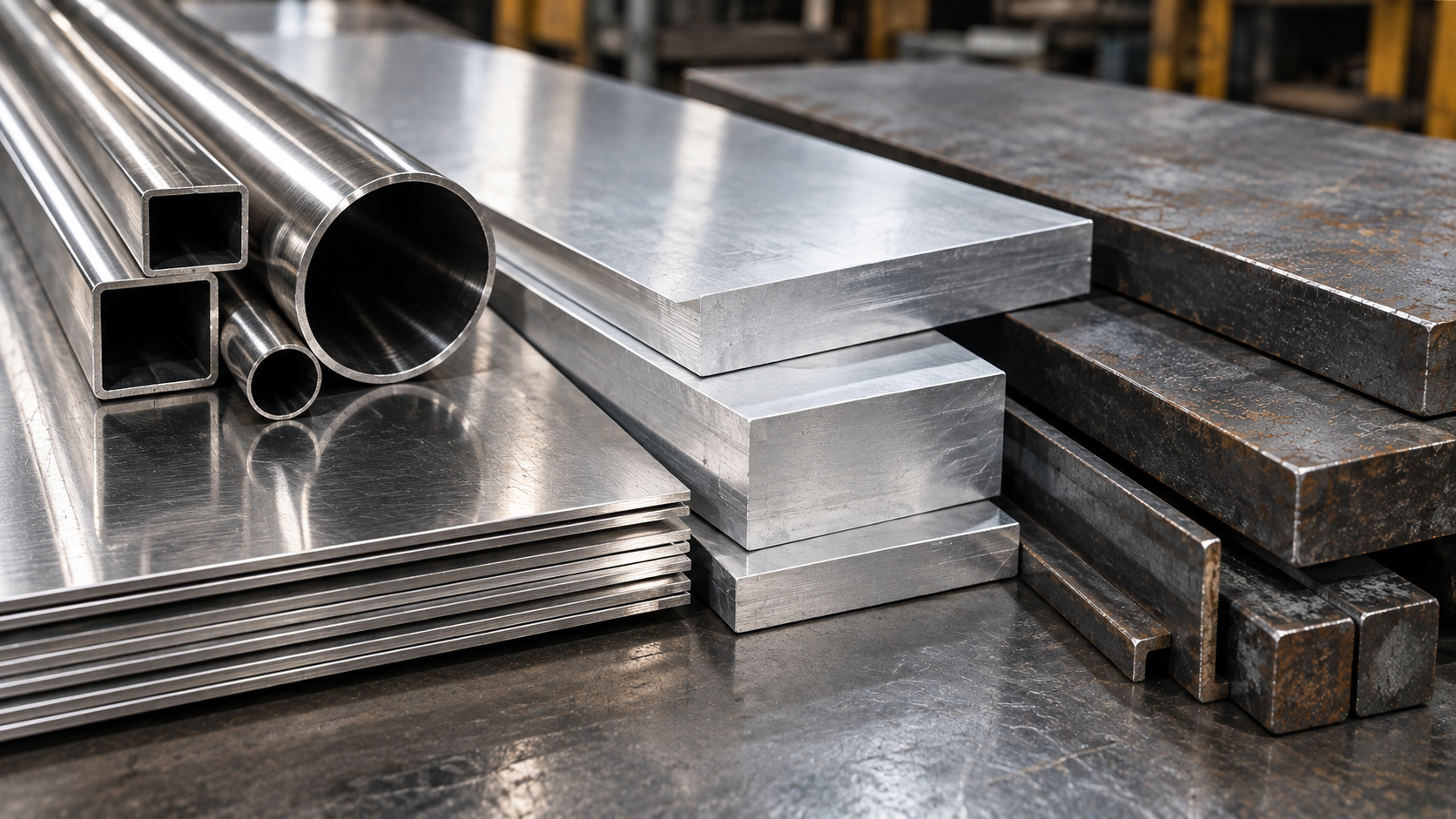

Stainless Steel vs Aluminium vs Mild Steel: Which Material Should You Choose for Metal Fabrication?
Choosing a material is one of the most important early decisions in a metal fabrication project.
Stainless steel, aluminium and mild steel are all widely used, but they do not offer identical properties. A material that works well for an indoor fabricated frame may not necessarily be the most appropriate choice for a lightweight component or an application exposed to moisture and corrosive conditions.
This guide compares stainless steel, aluminium and mild steel across practical considerations including weight, corrosion resistance, strength, fabrication and typical applications.
For a broader understanding of fabrication processes and industry developments, you can also read Logam’s guide to latest developments in sheet metal fabrication in Malaysia.
Stainless Steel vs Aluminium vs Mild Steel: Quick Comparison
| Consideration | Stainless Steel | Aluminium | Mild Steel |
|---|---|---|---|
| Weight | Relatively heavy | Significantly lighter than steel | Relatively heavy |
| Corrosion Resistance | Generally high, depending on grade and environment | Naturally corrosion resistant, depending on alloy and environment | Usually requires suitable protection where corrosion is a concern |
| Strength | Depends on stainless steel grade | Depends on alloy and temper | Depends on steel grade |
| Fabrication | Can be cut, formed and welded using suitable processes | Can be formed, machined and welded depending on alloy | Commonly cut, formed and welded |
| Surface Treatment | Often used with exposed finishes; additional finishing is also possible | Can be anodised or otherwise finished | Frequently painted, powder coated or otherwise protected |
| Common Selection Reason | Corrosion resistance and durability | Low weight and corrosion resistance | General fabrication and structural applications |
These are broad comparisons only. Actual performance depends on the specific grade or alloy, thickness, design, environment and fabrication method. Material-selection guidance for stainless steel, for example, considers corrosion environment, mechanical properties, fabrication operations and total cost rather than treating all stainless grades as equivalent.
What Is Stainless Steel?
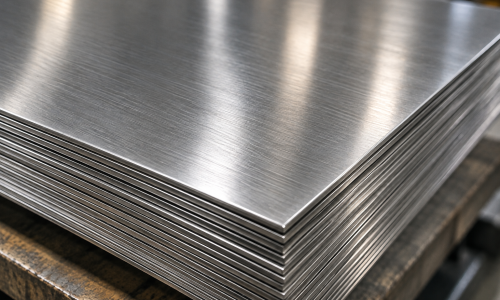
Stainless steel is a family of iron-based alloys containing at least 10.5% chromium. The chromium allows a thin protective oxide layer to form naturally at the surface, giving stainless steel its characteristic resistance to corrosion.
However, stainless steel is not one single material.
Different stainless-steel families and grades provide different combinations of corrosion resistance, strength, formability, weldability and other properties. Common examples include austenitic grades such as 304 and 316, while ferritic, martensitic and duplex stainless steels serve other requirements.
This makes stainless steel useful across many fabricated products where durability, appearance and resistance to the operating environment are important.
What Is Aluminium?
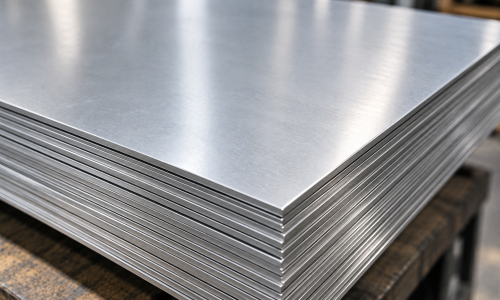
Aluminium is particularly attractive when reducing weight is important.
The Aluminum Association notes that aluminium can weigh substantially less than steel while providing a useful strength-to-weight ratio. Aluminium also naturally develops a protective oxide layer that contributes to its corrosion resistance.
Like stainless steel, however, aluminium is not one uniform material.
Different alloying elements and tempers change properties such as strength, workability and corrosion resistance. The Aluminum Association therefore maintains separate alloy and temper designations rather than treating all aluminum products as interchangeable.
Aluminium can be particularly useful where low weight, corrosion resistance and manufacturability are important design considerations.
What Is Mild Steel?
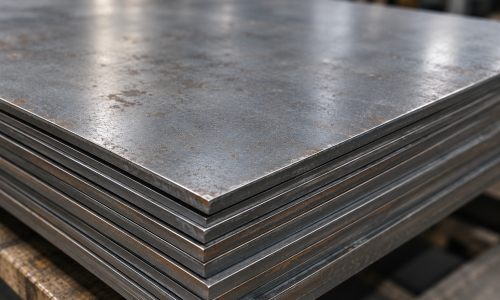
Mild steel is a type of low-carbon steel commonly used for general metal fabrication.
It is widely used for fabricated frames, supports, structures and other engineering components. Unlike stainless steel and aluminium, ordinary carbon steel does not offer the same inherent level of corrosion resistance, so appropriate coatings or surface treatments may be required depending on the service environment.
Logam’s fabrication capabilities include mild steel alongside stainless steel and aluminium, allowing material selection to be considered according to the requirements of a particular project.
Which Is Lighter: Stainless Steel, Aluminium or Mild Steel?
Of the three, aluminium is generally the lightweight option.
This can matter significantly when the fabricated product needs to be transported, moved regularly or incorporated into a design where overall weight is important.
Examples could include certain equipment components, covers, panels, transport-related parts or other fabricated products where reducing mass is beneficial.
However, weight alone should not determine material selection. Required strength, stiffness, dimensions, joining method and service environment also need consideration.
A lighter material is not automatically the better material for every project.
Which Has Better Corrosion Resistance?
This is another area where the operating environment matters.
Stainless Steel
Corrosion resistance is one of the main reasons stainless steel is selected. Its chromium-rich passive surface layer provides protection, but stainless steel can still corrode under certain conditions. Grade selection therefore matters.
For example, 316 stainless generally provides better resistance than 304 in chloride-containing environments because of differences in alloy composition.
Aluminium
Aluminium naturally develops an oxide layer that helps protect the underlying material from corrosion. Its actual corrosion behaviour still depends on the alloy and exposure conditions.
Mild Steel
Where corrosion is a concern, mild steel generally requires greater consideration of surface protection.
Depending on the application, appropriate finishing or protective treatment may therefore form part of the overall fabrication specification.
How Does Material Choice Affect Fabrication?
Material selection doesn’t only affect the finished product. It can also affect how that product should be fabricated.
Cutting, forming, machining and welding behaviour can differ according to material and grade.
Stainless steel, for example, can be cut, sheared, bent, formed and welded, but its mechanical properties need to be considered when selecting fabrication methods.
Aluminium alloys also vary in workability and weldability, meaning alloy selection can influence the manufacturing approach.
Logam works with stainless steel, aluminium and mild steel and provides fabrication capabilities covering processes such as cutting, forming, welding and machining. For more about these capabilities, see Precision and Innovation in Sheet Metal Fabrication Malaysia.
Which Material Is Suitable for Different Applications?
A practical way to narrow the choice is to start with the application’s requirements.
Consider Stainless Steel When:
Corrosion resistance, durability or an exposed metal finish is important.
Depending on the grade, stainless steel can suit fabricated equipment, architectural metalwork, commercial equipment and industrial applications.
Consider Aluminium When:
Reducing weight is an important design requirement.
Its combination of relatively low weight and corrosion resistance makes aluminium useful across transportation, construction and manufactured products.
Consider Mild Steel When:
The project requires a commonly fabricated steel for general engineering or structural applications and the required corrosion protection can be incorporated into the design.
The final choice still needs to consider the particular grade, dimensions, loads, environment and finishing requirements.
Why Does Material Grade Matter?
Material selection doesn’t only affect the finished product. It can also affect how that product should be fabricated.
Cutting, forming, machining and welding behaviour can differ according to material and grade.
Selecting “stainless steel” or “aluminium” may only be the beginning.
Consider stainless steel.
304 is widely used across many general applications, while 316 contains molybdenum and can provide improved resistance in certain chloride-containing environments. Other stainless families and grades are available for different mechanical, temperature and corrosion requirements.
The same principle applies to aluminium. Alloying elements and temper can change properties such as strength, corrosion resistance and workability.
Material type → Grade/alloy → Fabrication requirements → Service environment
This is particularly important for custom fabrication because two products that look similar may operate under very different conditions.
5 Questions to Ask Before Choosing a Fabrication Material
Before deciding between stainless steel, aluminium and mild steel, consider these five questions:
1. Where will the finished product be used?
Indoor, outdoor, industrial, marine or other environments can create very different material requirements.
2. Will it be exposed to moisture, chemicals or corrosive conditions?
The actual environment is important when considering corrosion resistance and grade selection.
3. How important is weight?
If reducing mass is a major requirement, aluminium may deserve closer consideration.
4. What mechanical performance is required?
Consider the expected loads, dimensions and functional requirements rather than comparing materials only by name.
5. What fabrication and finishing will the product require?
Cutting, bending, welding, machining and surface finishing requirements can affect which material and grade are practical.
Material selection should therefore happen as part of the overall design and fabrication process—not as an isolated decision.
There Is No Single "Best" Metal for Every Fabrication Project
Stainless steel, aluminium and mild steel each have useful characteristics.
Stainless steel can provide strong corrosion resistance and durability. Aluminium offers low weight and natural corrosion resistance. Mild steel remains useful across a wide range of general fabrication and engineering applications.
The better choice depends on what the finished product needs to do, where it will operate and how it will be fabricated.
For businesses planning custom sheet metal fabrication in Malaysia, discussing material requirements during the design stage can help ensure the selected material, grade, fabrication process and finish are appropriate for the intended application. Logam states that its core expertise includes the design, fabrication and installation of custom-made products using multiple materials.
Frequently Asked Questions
What is stronger, aluminium or stainless steel?
It depends on the specific stainless-steel grade and aluminium alloy being compared, as well as which mechanical property matters for the application. It is more accurate to compare specified grades and required performance than to assume every stainless steel is stronger than every aluminium alloy.
Which metal will never rust?
Stainless steel is highly corrosion resistant, while aluminium develops a protective oxide layer. However, no material should be selected on the assumption that it is immune to every form of corrosion. Environment, material grade and design conditions still matter.
Is 6061 aluminium stronger than 304 stainless steel?
This comparison requires more detail than the material names alone because properties depend on material condition, temper, product form and the mechanical property being compared. For engineering applications, use the relevant material specifications rather than a general “stronger/weaker” rule.
What is a disadvantage of stainless steel?
There is no single disadvantage for every application. Compared with aluminium, stainless steel is generally heavier. Different grades may also require different fabrication considerations. Whether these characteristics are disadvantages depends on the project’s requirements.
How do I choose between stainless steel, aluminium and mild steel?
Start with the operating environment, required mechanical performance, weight, corrosion exposure, fabrication method and finishing requirements. Then select an appropriate grade or alloy rather than choosing only by the general material name.
Need Help With Your Metal Fabrication Project?
Choosing the right material starts with understanding how the finished product will be used.
Kejuruteraan Logam Seberang Sdn. Bhd. provides custom metal fabrication and engineering solutions in Malaysia, working with materials including stainless steel, aluminium and mild steel across custom fabrication projects. Its capabilities include design, fabrication and installation for a range of industrial and engineering requirements.

